
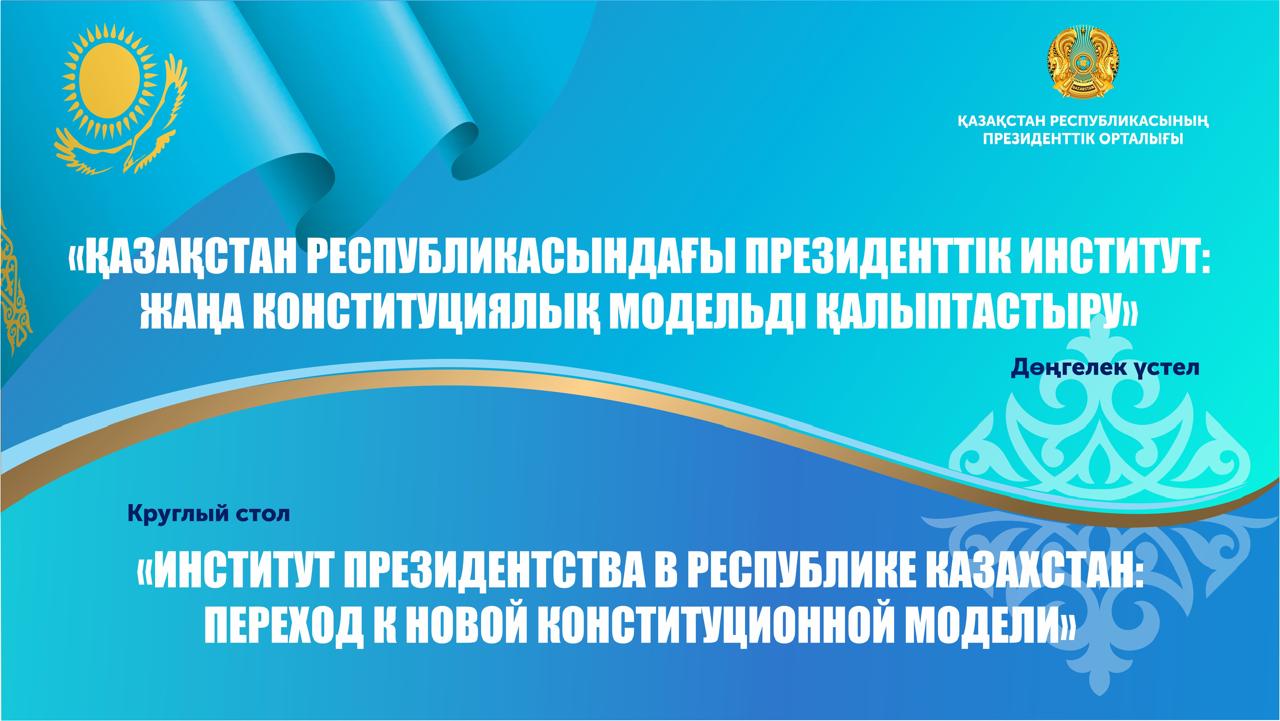
On April 23, 2026, at 11:00 AM, the Presidential Center of the DPA RK will host a roundtable discussion titled "The Institution of Presidency in the Republic of Kazakhstan: Transition to a New Constitutional Model."
Kazakhstan is currently undergoing significant institutional transformation, marked by the adoption of a new Constitution through a national referendum on March 15, 2026.
The Basic Law directly influences the structure and role of the presidency as a central component of public administration and strategic decision-making. The 2026 constitutional changes to the President's status and powers are systemic, impacting the fundamental principles underlying the organization of state power.
The new Constitution establishes several mechanisms to strengthen the presidency, such as granting the right to appoint key officials and influence the formation of new political institutions. The creation of the vice president position further reinforces the presidential hierarchy and institutionalizes the mechanism for succession of power. Simultaneously, the system of checks and balances among the President, the Kurultai, and other branches of government is being reinforced.
Participants will include parliamentarians, representatives from the scientific community, development institutions, civil society, and leading Kazakhstani experts. Notable attendees are Bakytzhan Temirbolat, Director of the Presidential Center; Sergey Udartsev, Judge of the Constitutional Court; Madina Nurgaliyeva, Director of the Institute of Public Policy of the AMANAT Party.
The roundtable will focus on discussing and analyzing the transformation of the presidency in Kazakhstan within the framework of the newly adopted 2026 Constitution. This format of discussion will not only enable us to document the substance of the changes that have taken place, but also to identify their systemic implications and determine the direction of the further evolution of the Kazakhstani model of statehood.