
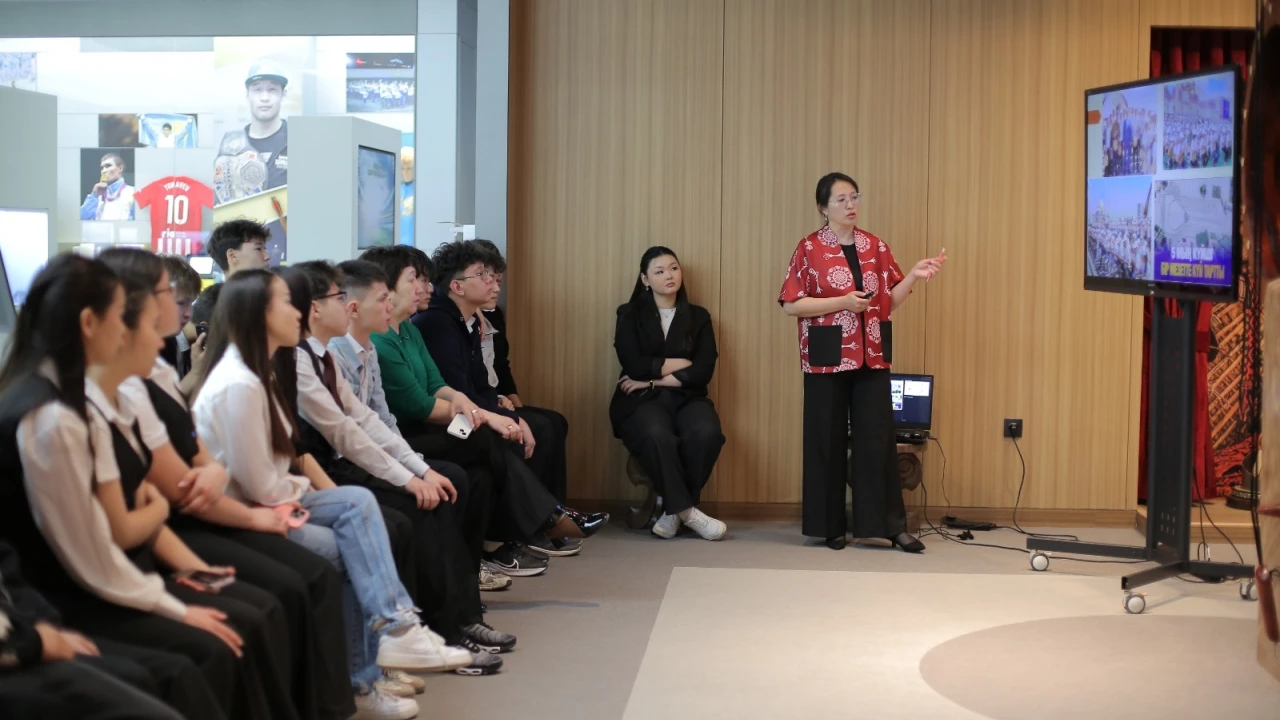
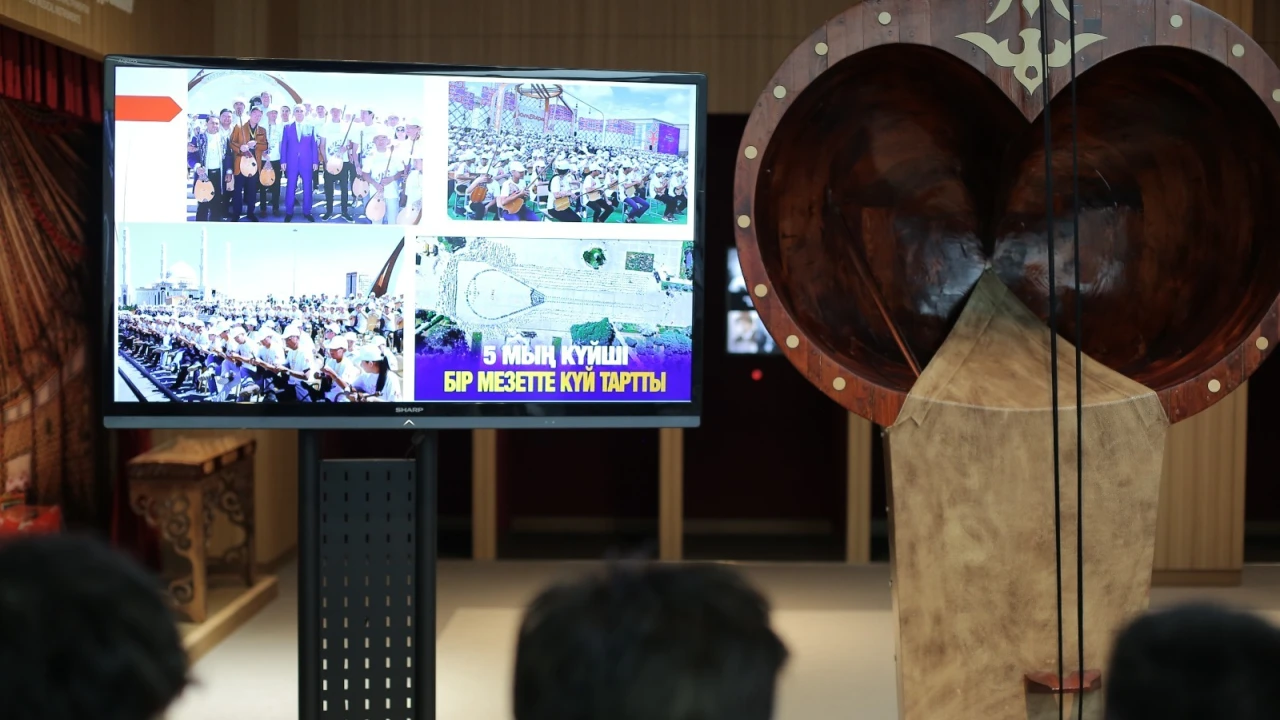
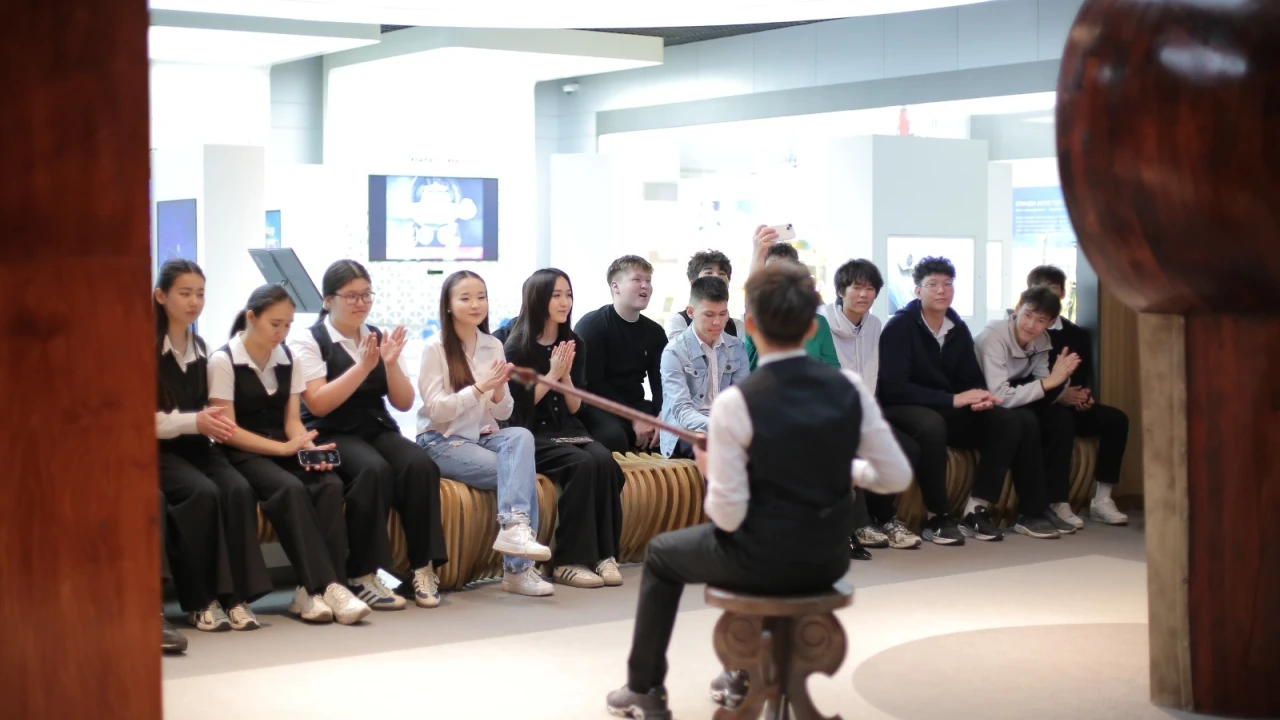

The Museum of the Presidential Center of the Republic of Kazakhstan hosted a museum lesson titled "Musical Art of the Kazakhs. The Code of the Steppe Melody: Three Instruments – Three Fates." Ninth-grade students from Grade G at School-Gymnasium No. 51 in the capital attended the event.
The event was dedicated to exploring the philosophy of traditional art and discovering the sacred meanings in the sounds of the Great Steppe. The museum's inspiring atmosphere allowed students to study history and literally touch the national code through authentic artefacts and exhibits.
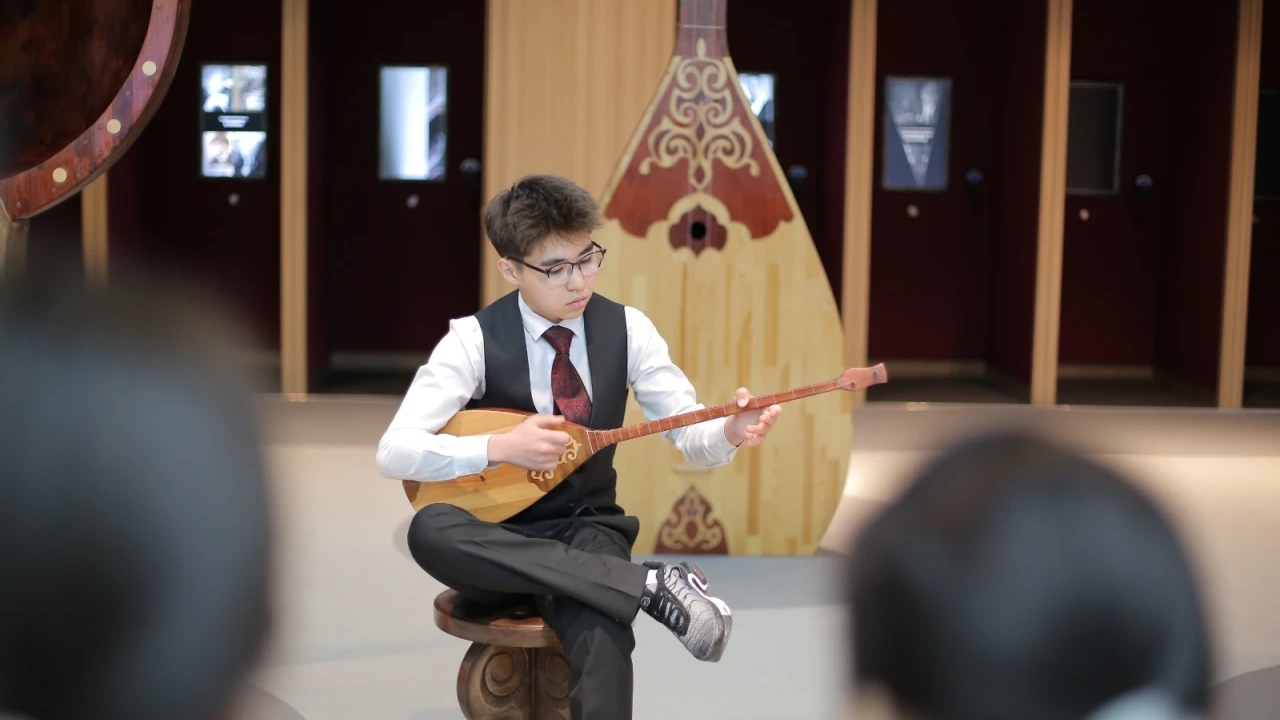
The lesson highlighted the invaluable contribution of scientist and professor Bolat Sarybayev, whose achievements helped revive dozens of ancient instruments, such as the zhetygen, sherter, and sazsyrnai. When discussing musical heritage classification, the organizers emphasized that Kazakh instruments are not just objects of wood and leather but living entities with their own soul and voice. Students learned about crafting the dombra from precious woods, the unique technique of playing the kobyz using the tyrnak, and the meditative nature of the multi-stringed zhetygen.
The lesson centred on the concept of "three fates": the dombra as a symbol of national spirit and freedom, the kobyz as the bearer of a mystical connection with ancestors through the legacy of Korkyt Ata, and the zhetygen as a representation of profound human sorrow and resilience, as depicted in the legend of the seven sons. Students were introduced to the works of prominent kyui performers and composers, including Kurmangazy, Tattimbet, Nurgisa Tlendiev, and Shamshi Kaldayakov, enabling them to trace the evolution of ancient kyuis into the modern classical tradition.